

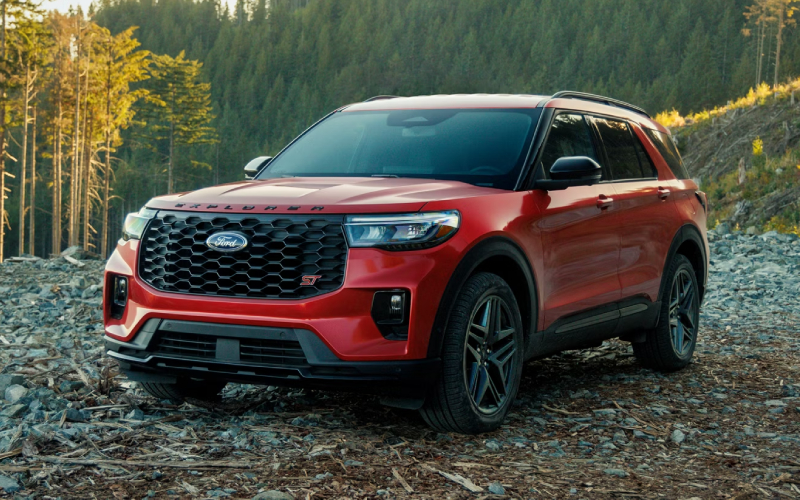
Gregg Smith Ford Lincoln - Which three-row SUV fits family road trips best near Warrensburg, MO: 2026 Ford Explorer or Chevrolet Traverse?
Planning a long-haul family adventure means choosing the right three-row SUV. Many shoppers weigh the 2026 Ford Explorer against the 2026 Chevrolet Traverse for highway comfort, cabin tech, and confidence on variable terrain. Both SUVs deliver strong feature sets, yet their philosophies diverge in ways that matter over hours behind the wheel. The Explorer’s rear-wheel-drive platform with available all-wheel drive emphasizes stable, composed cruising and confident towing, while the Traverse leans into space and convenience with up to eight-passenger seating and expansive cargo flexibility. If your trips span long stretches of divided highway, both models offer available hands-free driving tech—BlueCruise and Super Cruise®—to reduce fatigue when conditions allow. Here is how to think through the details so your next road trip starts strong.
Cabin technology sets the tone on family routes. The Explorer’s standard 13.2-inch touchscreen runs the Ford Digital Experience for native Google and Amazon apps, voice assistance, and streaming when parked. The Traverse provides a standard 17.7-inch touch-screen paired with an 11-inch driver information display, plus Google built-in compatibility and available HD Surround Vision for low-speed maneuvering. For passengers, flexible second-row seating and easy third-row access matter as much as screen size; the Explorer’s one-touch mechanism to move the second row streamlines entries and exits, while the Traverse offers Smart Slide Seats and an AutoSense Power Liftgate that opens hands-free when your arms are full. If your routes include unpaved turnoffs to trailheads or cabins, off-road trims matter: the Explorer Tremor adds a lifted suspension, limited-slip rear differential, and all-terrain tires; the Traverse Z71 brings an off-road suspension, a Twin-Clutch AWD System, Terrain Mode, and Hill Descent Control.
- Highway assistance: The Explorer offers available BlueCruise; the Traverse offers available Super Cruise®.
- Daily composure: The Explorer’s rear-wheel-drive basis enhances balance; the Traverse emphasizes roomy stability.
- Trail hardware: Explorer Tremor adds lifted suspension and a limited-slip rear differential; Traverse Z71 adds Twin-Clutch AWD and Hill Descent Control.
- Towing support: Explorer includes a Class III Towing package across the lineup; Traverse includes trailering equipment for its standard 5,000-pound rating.
- Passenger needs: Explorer prioritizes comfortable first and second rows and simplified third-row access; Traverse offers available eight-passenger capacity.
Both models bring robust standard safety suites. The Explorer includes forward-collision warning with automated emergency braking, blind-spot monitoring with rear cross-traffic alert, and lane-keeping assistance, with available self-parking. The Traverse equips Chevy Safety Assist and more than 20 standard driver assistance features, including Automatic Emergency Braking, Rear Cross Traffic Braking, and Blind Zone Steering Assist. For long trips, these systems complement—but never replace—attentive driving. The key is how confidently each SUV settles in at speed and keeps everyone comfortable mile after mile. Many families appreciate the Explorer’s blend of road feel, 10-speed automatic, and available 400-hp twin-turbo V6 for decisive passing. Others value the Traverse’s expansive interior and organization for bulky gear. Your priorities decide which advantage matters more.
At Gregg Smith Ford Lincoln, serving Warrensburg, Sedalia, and Warsaw, our product specialists help families compare features side by side and set up real-world test routes that mirror highway and rural driving. From configuring BlueCruise or Super Cruise® to tailoring seating and storage for strollers or sports gear, we map recommendations to your travel style. If your road trips demand balanced handling, confident towing, and a range of powertrains that scale from efficient to spirited, the Explorer’s lineup delivers lasting flexibility. If your focus is maximum seating and a larger touch-screen with Google built-in, the Traverse makes a strong case. Either way, we will walk you through the nuances so your next vacation feels as effortless as the drive.
Frequently Asked Questions:
Is hands-free highway driving available on both SUVs?
Yes. The Explorer offers available BlueCruise on select trims, and the Traverse offers available Super Cruise® on compatible roads.
Which is better for light off-roading and gravel roads?
Both offer purpose-built trims. Explorer Tremor adds a lifted suspension, a limited-slip rear differential, and all-terrain tires. Traverse Z71 equips a Twin-Clutch AWD System, Terrain Mode, Hill Descent Control, and an off-road suspension.
How do the tech interfaces compare?
Explorer includes a standard 13.2-inch touchscreen running the Ford Digital Experience, while Traverse includes a standard 17.7-inch touch-screen with Google built-in compatibility. Both support smartphone integration and voice assistants.
Do both support towing family gear like pop-up campers or small boats?
Yes. Each SUV is rated up to 5,000 pounds when properly equipped, with included trailering equipment to support that rating.